
Why Is Raksha Bandhan Celebrated?
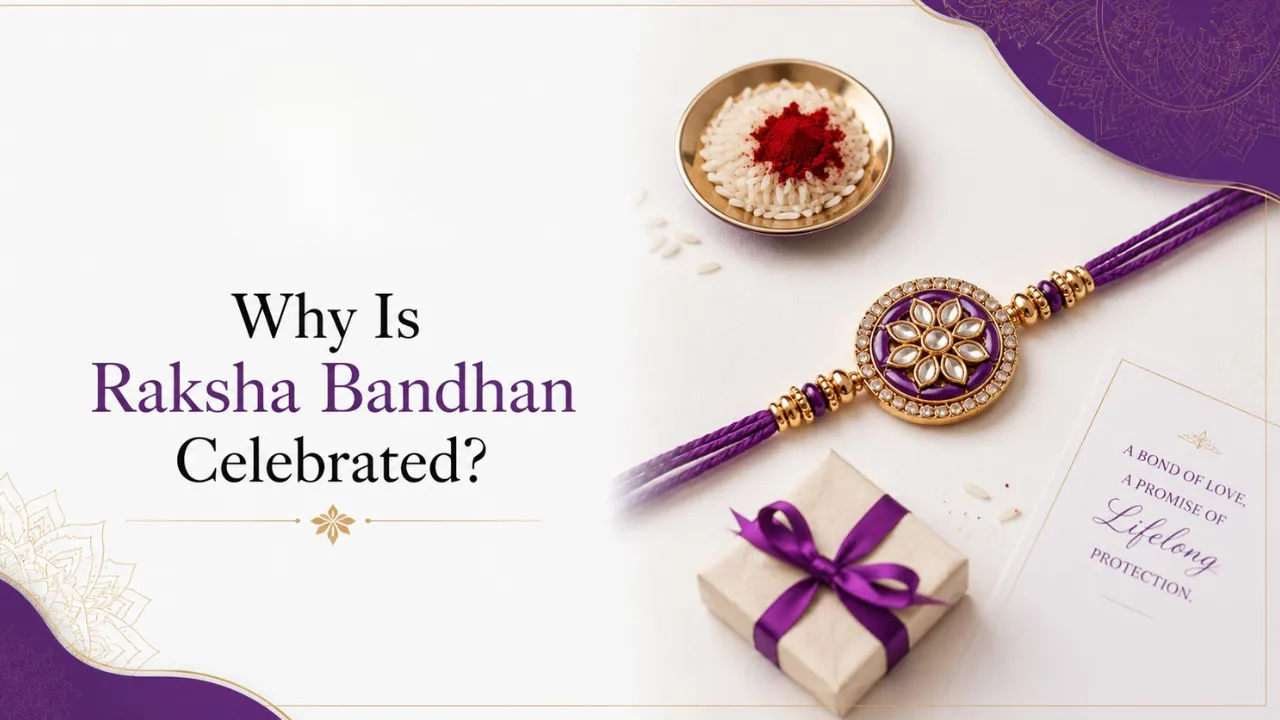
Why is Raksha Bandhan celebrated? It marks the bond between brothers and sisters, "Raksha" means protection, "Bandhan" means bond. Discover the meaning of the rakhi thread, the legends of Krishna & Draupadi and Lakshmi & King Bali, and why the festival still matters today.
Why Is Raksha Bandhan Celebrated?
The meaning behind the thread, the old stories that gave it weight, and why it still matters.
Every Shravana Purnima, sisters tie a thread on their brothers' wrists, and from the outside it looks like a small thing. It isn't. Behind that one gesture sits a word that means "the bond of protection," a handful of old stories, and a promise that has outlived empires.
Quick answer
Raksha Bandhan celebrates the bond between brothers and sisters. "Raksha" means protection and "Bandhan" means bond, so the rakhi stands for a sister's love and a brother's promise to look out for her. It's tied on Shravana Purnima, the full moon of the Shravan month, and its meaning comes from legends like Krishna and Draupadi and Goddess Lakshmi and King Bali.
What the Name Actually Means
Split the word and it explains itself. Raksha is protection; Bandhan is a bond or a tie. Put them together and Raksha Bandhan is "the bond of protection." The rakhi isn't jewellery, it's a raksha sutra, a protective thread. When a sister ties it, she's praying for her brother's wellbeing and, in the same motion, asking him to stand by her. His gift in return isn't payment, it's his half of the promise.
The Stories That Gave It Weight
Goddess Lakshmi & King Bali
The oldest version has Goddess Lakshmi tying a thread on the demon king Bali's wrist to make him her brother, then using that bond to bring Lord Vishnu home from Bali's kingdom. It's where the idea of the rakhi as a raksha sutra, a thread that creates a duty of protection, first takes shape.
Krishna & Draupadi
The best-loved story is simple. When Krishna cut his finger, Draupadi tore a strip from her saree and bound the wound without a second thought. He didn't forget it. Years later, when Draupadi was being humiliated in the Kaurava court, it was Krishna who protected her honour. One small act of care, repaid when it mattered most.
Rani Karnavati & Humayun
Facing an invasion of Mewar, Rani Karnavati is said to have sent a rakhi to the Mughal emperor Humayun and asked for help. He took it as a brother's duty and marched to her aid. Historians debate the details, but the story stuck because it captured the thread's whole point: a rakhi could cross religion and kingdom and still mean protection.
What It Means Today
The festival has quietly widened over the years. Rakhis go to cousins, to close friends, to soldiers, sometimes across communities as a gesture of solidarity. And with families spread across cities and countries, the thread now travels by courier and the wishes by phone. The form changes; the point doesn't. In a world where people live further apart than they used to, a day set aside to say "I've got you" is worth keeping.
Celebrating From Afar?
If your sibling is in another city or country this Raksha Bandhan, we make personalised digital Rakhi cards and video messages, with names, photos and your own words, delivered to their phone on the day. From ₹199.
Frequently Asked Questions
Why is Raksha Bandhan celebrated?
It celebrates the bond between brothers and sisters. "Raksha" means protection and "Bandhan" means bond, so the rakhi stands for a sister's love and a brother's promise to protect her. It's rooted in legends like Krishna and Draupadi and Lakshmi and King Bali.
What does the rakhi thread symbolise?
The rakhi is a raksha sutra, a protective thread. It represents a sister's love and prayers for her brother, and his promise to protect and support her through life.
When is Raksha Bandhan celebrated?
On Shravana Purnima, the full moon of the Shravan month, usually in August. In 2026 it falls on Friday, 28 August.
Can a rakhi be tied to someone other than a brother?
Yes. Rakhis are tied to cousins, close friends, soldiers and elders who offer protection. The bond of care is what matters, not only a biological relationship.